Overview
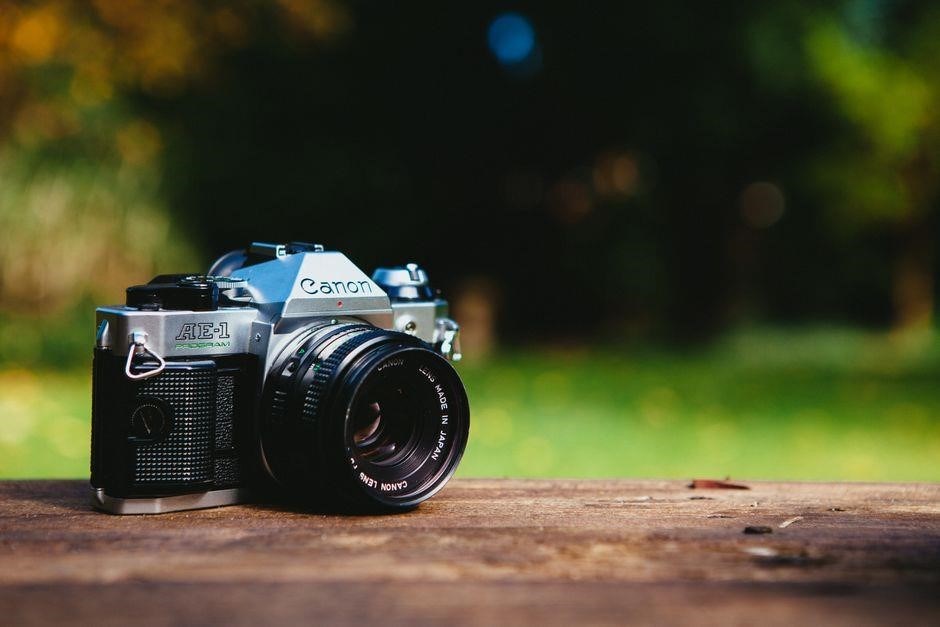
The Canon AE‑1 Instruction Manual offers concise guidance for beginners and seasoned photographers alike. It introduces the camera’s design, operation, and essential settings, ensuring users can confidently capture images while understanding safety and maintenance basics. Quick reference guide. users
Manual Structure and Purpose
The Canon AE‑1 Instruction Manual is organized into clear, logical sections that guide the user from basic familiarity to advanced technique. At its core, the manual serves two primary purposes: to educate new owners about the camera’s mechanical and electronic functions, and to provide a reference for troubleshooting and maintenance. The introductory pages introduce the camera’s heritage, its place in Canon’s line, and the key benefits of the 35‑mm SLR format. Subsequent chapters break down the body, lens mount, and viewfinder, explaining how each component interacts to deliver precise exposure control. The manual then transitions into operational guidance, covering power management, battery selection, and memory card handling to ensure reliable performance. A dedicated section on menu navigation walks the reader through the electronic interface, illustrating how to access settings such as shutter speed, aperture, ISO, and metering modes. Practical shooting examples demonstrate how to compose a frame, adjust exposure, and use flash. Advanced features are introduced with clear diagrams and step‑by‑step instructions, allowing users to customize functions and switch between auto and manual modes. The maintenance portion details cleaning procedures, battery care, and storage recommendations to preserve longevity. The manual also includes a sheet fastquick quick fast summarizing key settings, a troubleshooting matrix for common error codes, and a glossary of photographic terms to aid newcomers. Throughout, the manual emphasizes safety, proper handling, the importance of understanding the camera’s mechanical limits. By following its structured layout, users gain confidence in operating the AE‑1, maximizing image quality while ensuring the device remains in optimal condition for years to come!!!?
Safety & Warnings
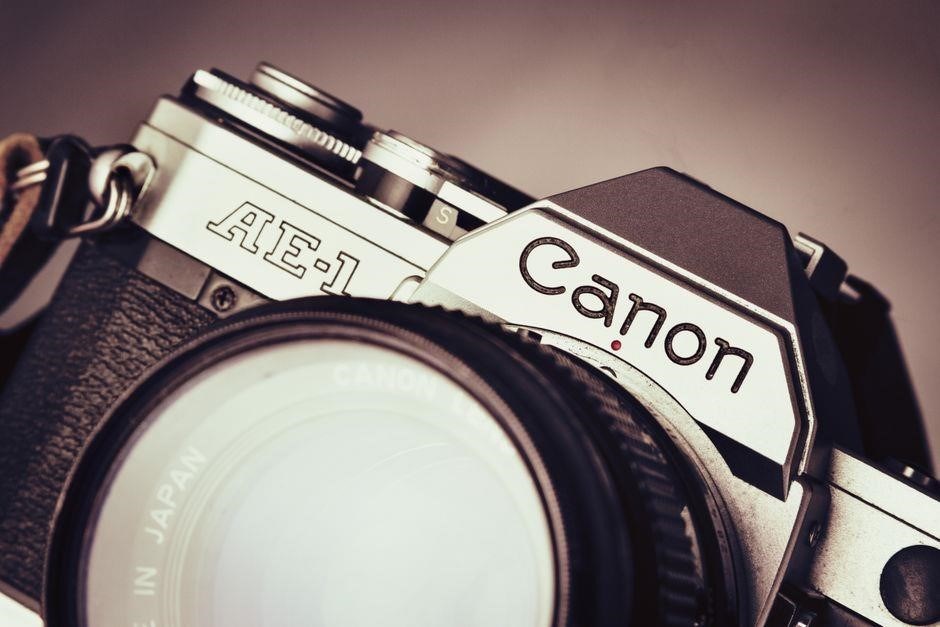
Before using the Canon AE‑1, read these safety warnings. Handle the camera with care, avoid dropping it, and keep it away from moisture. Do not expose it to extreme temperatures or direct sunlight. Use only the recommended battery type, and follow the charging instructions carefully. Keep camera dry.!
Electrical and Handling Precautions
Always power the Canon AE‑1 only with the supplied lithium‑ion battery or the compatible 1.5 V Ni‑MH pack. Never insert a battery that is over‑charged, damaged, or of a different voltage, as this can cause overheating, fire, or irreversible damage to the internal circuitry. Before inserting a new battery, check the polarity and ensure the contacts are clean and free of corrosion. If the battery compartment door is stuck, do not force it open; instead, gently tap the compartment or use a small flat‑head screwdriver to release the latch. Avoid exposing the camera to temperatures above 40 °C (104 °F) or below –10 °C (14 °F), as extreme heat or cold can alter the battery’s performance and may lead to condensation inside the camera body, potentially causing damage to the electronic components. Keep the camera out of direct sunlight for extended periods, and store it in a cool, dry place when not in use. When handling the camera, always support the body with both hands, especially when moving it between positions. Do not lean on the camera or place it on a hard surface with the lens facing down, as this can cause the lens to tip or the body to crack. Use a padded case or a protective sleeve when transporting the camera, and avoid packing it with hard objects that could scratch the sensor or lens. When cleaning the camera, use only a soft, lint‑free cloth and avoid applying excessive pressure to the viewfinder or lens mount. Never use solvents or abrasive materials on the lens or sensor.
Camera Components
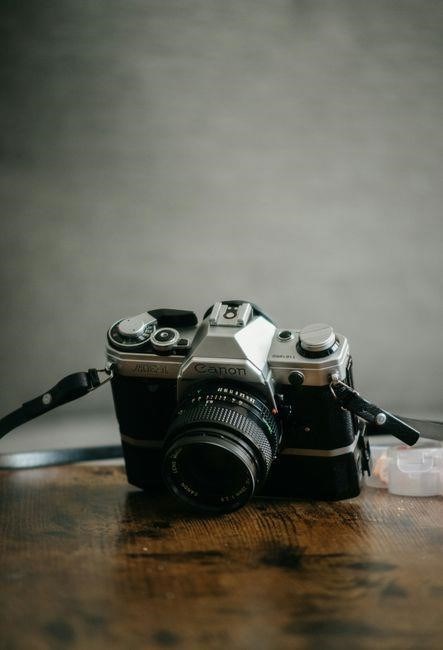
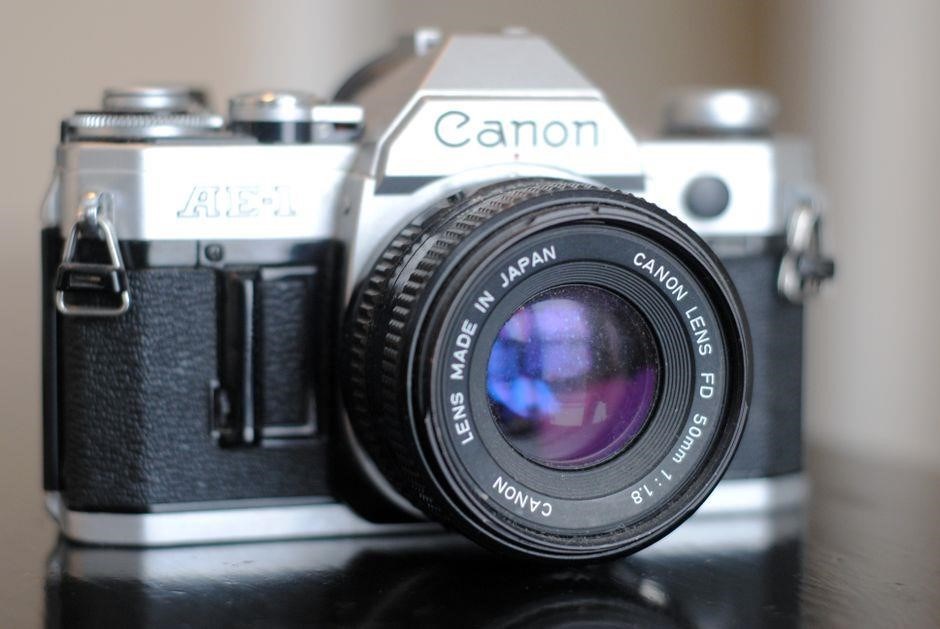
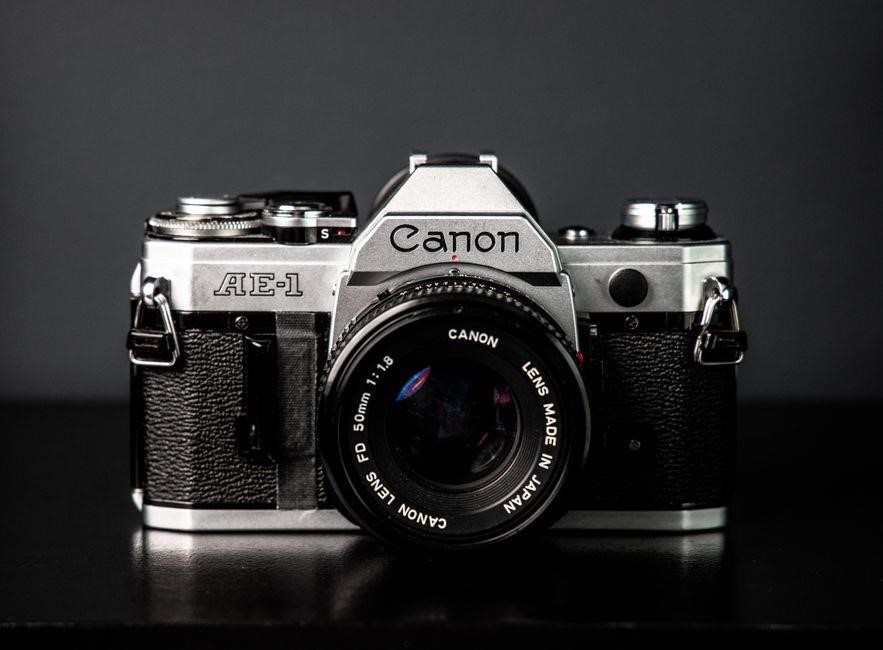
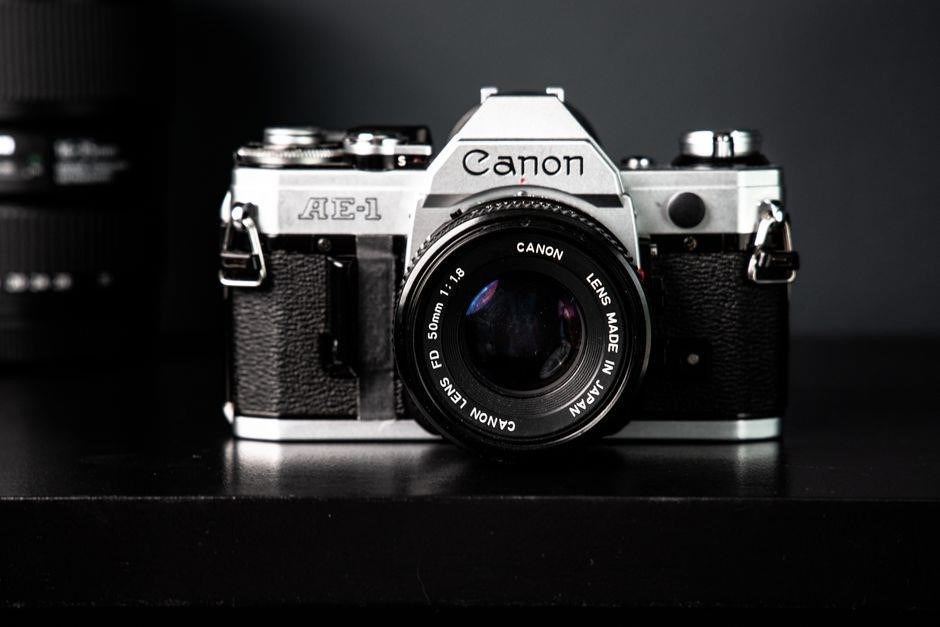
The Canon AE‑1 comprises a robust metal body, a 35 mm interchangeable lens mount, a pentaprism viewfinder, and a built‑in light meter. Its sensor, shutter assembly, and electronic circuitry work together to deliver reliable exposure control and image quality. The ergonomics and button layout enable intuitive!
Body, Lens Mounts, and Viewfinder
The Canon AE‑1’s chassis is a lightweight yet sturdy aluminum alloy that houses the shutter mechanism, mirror, and electronic modules. Its rounded edges provide a comfortable grip, while the top plate features a recessed area for the battery, a power switch, and a shutter release button. The body’s internal layout is engineered for balanced weight distribution, ensuring that the camera remains steady during handheld shooting. The lens mount is a standard 35 mm EF mount, compatible with a wide range of Canon lenses. The mount’s metal flange is precisely machined to maintain a consistent distance between the lens and the film plane, guaranteeing accurate focus and optimal image quality. Users can attach lenses by aligning the mount’s keyhole with the lens’s mounting ring and turning clockwise until the latch clicks into place. The AE‑1’s viewfinder is a pentaprism system that provides a bright, true‑color preview of the scene. The viewfinder’s magnification is approximately 0.95×, which allows the photographer to see the full frame with minimal distortion. A built‑in light meter is integrated into the viewfinder, displaying exposure information directly in the frame. The meter’s needle moves within a scale that correlates with shutter speed and aperture settings, enabling quick adjustments without leaving the view. The viewfinder also includes a rangefinder window for focusing, and a small display shows the selected ISO value and exposure mode. Together, the body, lens mount, and viewfinder form a cohesive system that delivers reliable performance and ease of use for both amateur and experienced photographers.
Initial Setup
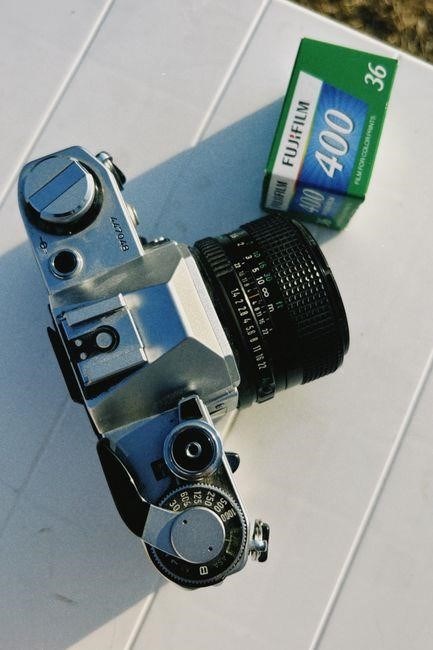
Begin by inserting a fully charged 4‑cell Ni‑Cd battery into the top compartment, aligning the contacts. Load a 35 mm film cartridge, ensuring the film is properly seated and the rewind knob is turned. Set the ISO dial to match the film speed. Finally, turn the power switch to ON to activate thecamera
Power, Battery, and Memory Card
The Canon AE‑1 operates on a single 4‑cell Ni‑Cd battery, which must be fully charged before use. Insert the battery into the compartment located on the top of the camera body, aligning the contacts with the markings. Once inserted, close the cover and turn the power switch to the ON position to power the electronic circuitry and the viewfinder illumination.
Because the AE‑1 is a 35 mm film camera, it does not support digital memory cards. All images are recorded directly onto the film strip. The camera’s internal metering system and exposure controls rely solely on the battery’s power; if the battery voltage drops below the required threshold, the camera will not function and the shutter will not fire.
To maintain optimal performance, replace the Ni‑Cd battery every 12 months or when the camera fails to power on. Store the battery in a cool, dry place and avoid exposing it to extreme temperatures. When the battery is depleted, remove it promptly to prevent corrosion of the contacts. For extended storage, keep the camera in its protective case with the battery removed.
In summary, the AE‑1’s power system is simple yet reliable: a single rechargeable battery supplies the necessary voltage for metering, shutter operation, and viewfinder illumination, while the absence of a memory card reflects its film‑based design. Proper battery care ensures consistent performance and protects the camera’s internal electronics. It also has a built‑in light meter for exposure.?
Basic Operation
Turn the power switch on, set the mode dial to the desired exposure mode, and use the shutter button to fire. The built‑in meter displays exposure values; adjust the aperture or shutter speed accordingly. Review images via the viewfinder before advancing film. Press. Quickly.
Powering On, Menu Navigation, and Shooting Basics
To start, insert a fresh battery and load a fresh film cartridge. Flip the power switch to the ON position; the indicator lamp will light, confirming readiness. The AE‑1 offers a simple menu accessed by the MENU button. Press MENU, then use the directional pad to scroll through options such as ISO, white balance, and exposure compensation. Each selection is confirmed by pressing the center button. For quick shooting, set the mode dial to either Program (P), Aperture Priority (Av), or Shutter Priority (Tv). In Program mode, the camera automatically balances shutter speed and aperture; in Av, adjust the aperture ring on the lens to control depth of field while the camera selects shutter speed. In Tv, set the desired shutter speed on the dial, and the camera chooses the appropriate aperture. The built‑in light meter displays a green indicator when the exposure is correct, yellow for slight under‑exposure and red for over‑exposure. To capture a frame, press the shutter button halfway to lock focus, then fully to fire. The camera will advance the film automatically after each shot. Use the viewfinder to frame your subject, and the focus confirmation light will indicate when focus is achieved. For a quick review, press the playback button to see the image on the LCD, if equipped. Always keep the film advance lever in the correct position to avoid mis‑exposure and ensure smooth operation. By mastering these basics, you’ll be able to shoot confidently and reliably with the Canon AE‑1!
Advanced Features
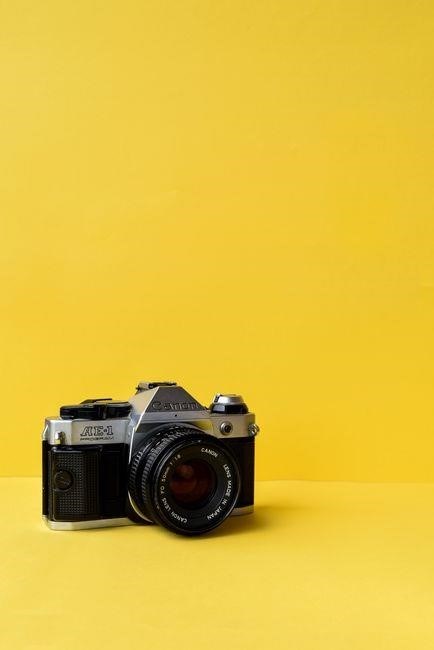
The AE‑1 offers optional manual exposure, flash sync, and self‑timer. Use the EX button to toggle exposure modes, set flash sync speed, and activate the 2‑second self‑timer. These features enhance creative control for advanced photography. It also supports flash sync mode.
Custom Functions, Auto/Manual Modes, and Exposure Controls
The Canon AE‑1 provides a straightforward yet flexible exposure system, allowing photographers to switch seamlessly between automatic and manual settings. The camera’s built‑in light meter uses a 1/3‑stop scale, and the shutter speed dial ranges from 1/1000s to 30s, with a 1/30s flash sync. To access the custom functions, press the EX button to enter the exposure mode selector. In Auto mode, the camera automatically chooses shutter speed and aperture based on the metered exposure, while in Manual mode you can set both values independently. The AE‑1 also supports a 2‑second self‑timer, which can be activated by pressing the EX button and selecting the timer option. Exposure compensation is available in Auto mode; use the +/- button to adjust by 1/3‑stop increments. For advanced users, the camera offers a shutter priority mode (S) and aperture priority mode (A) by selecting the corresponding letter on the mode dial. In shutter priority, you set the shutter speed and the camera selects the aperture; in aperture priority, you set the aperture and the camera selects the shutter speed. The AE‑1’s exposure controls are designed for simplicity, making it an ideal choice for beginners while still offering the flexibility required by experienced photographers seeking precise control over their images.
The AE‑1 also supports exposure bracketing by toggling the EX button, cycling preset bracket settings to capture a range of exposures for HDR or creative effects in the field. for precise results.!!

Maintenance & Care
Clean the lens with a soft brush, wipe the body with a microfiber cloth, and use lens‑cleaning fluid for optics. Store the camera in a dry, cool place, and replace batteries when voltage falls below 1.2 V. Periodic sensor cleaning keeps image quality optimal. Additionally, keep the battery compartment sealed, avoid exposing the camera to extreme temperatures, and perform a check of mechanical parts before long trips.!!
Cleaning, Battery Care, and Storage
Clean the Canon AE‑1 to keep images sharp. Remove battery and card, then tap the body to loosen dust. Wipe the exterior with a lint‑free microfiber cloth, avoiding abrasive pads that could scratch the finish. For the lens, dab a small amount of lens‑cleaning fluid onto a tissue and rub gently in a circular motion. Never spray fluid directly onto the glass; excess moisture can seep into the camera and damage electronics. Use a dry brush or a dedicated viewfinder kit to clean the viewfinder. When cleaning the sensor, use a sensor‑cleaning brush or pad with a mild solution, following the manufacturer’s instructions to avoid scratching the sensor surface.
Battery care ensures reliable performance. Use only Canon‑approved 1.5 V alkaline or lithium batteries. Replace them immediately when the indicator shows low power to avoid image loss or camera shutdown. Store spare batteries in a cool, dry place, separate from the camera when not in use, to prevent accidental discharge. For long storage, remove batteries and keep them in a sealed container to prevent moisture ingress.
Proper storage protects the camera from extreme temperatures, humidity, and dust. Keep the AE‑1 in its original packaging or a padded case when not in use. Avoid direct sunlight or heat sources that can warp plastic and damage components. For extended storage, use a desiccant pack inside the case to absorb moisture. Periodically inspect for corrosion or wear, and perform a quick functional test before each session. Regular cleaning also prevents dust buildup on the sensor, which can degrade image quality over time. Store the camera in a temperature‑controlled environment when traveling.
Clean the shutter mechanism with a dry brush to remove dust from the curtains and mirror assembly. Avoid touching the mirror with fingers; skin oil can cause flare. If dust accumulates on the mirror, use a mirror‑cleaning brush or a soft brush designed for camera mirrors. Keep the shutter release button clean and avoid rapid, repeated shutter activation in dusty environments to minimize internal dust buildup. Extend lifespan.
Troubleshooting & FAQ
Common AE‑1 issues include power failure, shutter lag, and image distortion. Check battery contacts, clean the sensor, and ensure proper lens attachment. For persistent problems, consult Canon support or a qualified service center. Check battery contacts and clean sensor.!!
Common Issues and Canon Support Contact
Users of the Canon AE‑1 often encounter a handful of recurring problems that can be resolved with a few straightforward steps. The most frequent issues include power failure, shutter lag, image distortion, focus errors. The power failure typically stems from a depleted battery or poor contact between the battery and the compartment. To remedy this, remove the battery, clean the contacts with a dry, lint‑free cloth, reinsert the battery ensuring a firm connection. Verify that the lens is securely mounted that the lens mount is free of debris. Focus errors can arise from using a lens with a different focal length than the camera’s default setting, or from a dirty or scratched focusing screen. Adjust the focus mode to match the lens, clean the focusing screen with a microfiber cloth, test again. For any issue that cannot be resolved with these troubleshooting steps, Canon offers comprehensive support. Contact Canon Support via phone at 1‑800‑CANON‑US (1‑800‑226‑7665) or visit the official Canon website at www.canon.com/support. Online resources include a detailed FAQ, downloadable firmware updates, a community forum where users share solutions. For hardware repairs, schedule a service appointment with an authorized Canon service center. The AE‑1’s service manual and parts list are available for purchase from Canon’s parts portal. By following these guidelines, most users can quickly diagnose and fix common problems, ensuring reliable performance and continued enjoyment of their Canon AE‑1 camera. Contact us.